

Harvest Fest is a celebration of student and community efforts to achieve a just and sustainable food system
Climate Week blog posts were written by students from the University of Michigan. They have not been edited by the U-M Communications team.
Harvest Fest is a celebration of student and community efforts to achieve a just and sustainable food system.
One week ago, The Campus Farm at Matthei Botanical Gardens and the U-M Sustainable Food Program hosted the 13th annual Harvest Fest. This year, Harvest Fest was the kickoff to the University of Michigan’s first-ever Climate Week. The celebration showcased the network of student organizations and community members who work together for sustainable food systems.
According to the UN’s Sustainable Development Goals, a sustainable food system is a food system that delivers food security and nutrition to everyone and has a positive impact on the environment. Striving to accomplish this, The U-M Sustainable Food Program leverages connections and collective knowledge to develop innovative student-centered food sovereignty initiatives, like Harvest Fest.
Harvest Fest was the coalescence of climate action, creativity, and science. Over 15 different organizations tabled at the event, sharing the many different ways one can get involved in climate action. Some organizations were science or engineering based, while others were facilitating artwork and highlighting the importance of visual aids in climate action. People learned about joymapping: marking areas that bring students joy on campus, to combat climate anxiety, the fundamentals of composting, using food waste as fuel for electrochemical reactors, how solar panels work, and so much more.
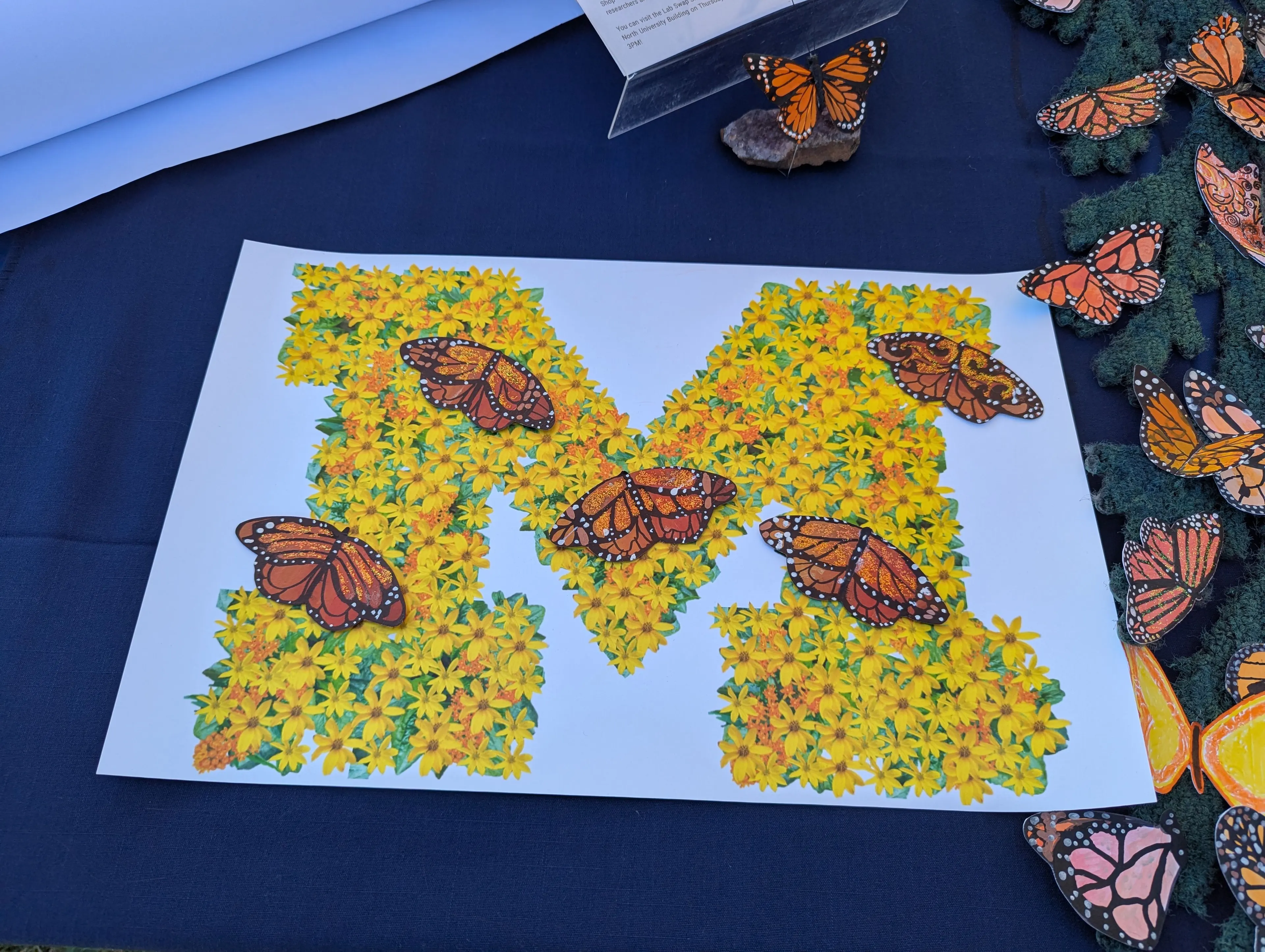
There were also many opportunities to create sustainable artwork of your own. Event go-ers screenprinted Harvest Fest T-shirts using thrifted clothing. Vegetables were used as stamps to create paintings. Harvest Fest allowed students and community members to learn about climate action in a creative and collaborative way, leaving people feeling inspired.
In addition to learning about innovative climate solutions and the organizations driving them, Harvest Fest had live music, games, farm tours, and their own local, sustainable food.
M Dining provided delicious samples for people using produce grown on The Campus Farm. Options included: an arugula salad with watermelon and cucumbers, a corn and bean salsa with tortilla chips, and pesto covered cherry tomatoes with mozzarella. Lesser Farms and Orchard handed out apples and apple cider, while educating people on the different varieties of apples and Lesser Farm’s role in providing local food to M Dining. JB’s Ice Pops, dedicated to supporting sustainable local food systems, was handing out their natural hand-crafted popsicles, a much needed treat during the hot day on The Campus Farm.
Overall, Harvest Fest made learning about sustainable food systems really fun. Enjoying food, music, crafts, and connecting with so many diverse people was the perfect way to learn just how much this University, its students, and the larger community care about our food systems and climate action as a whole.