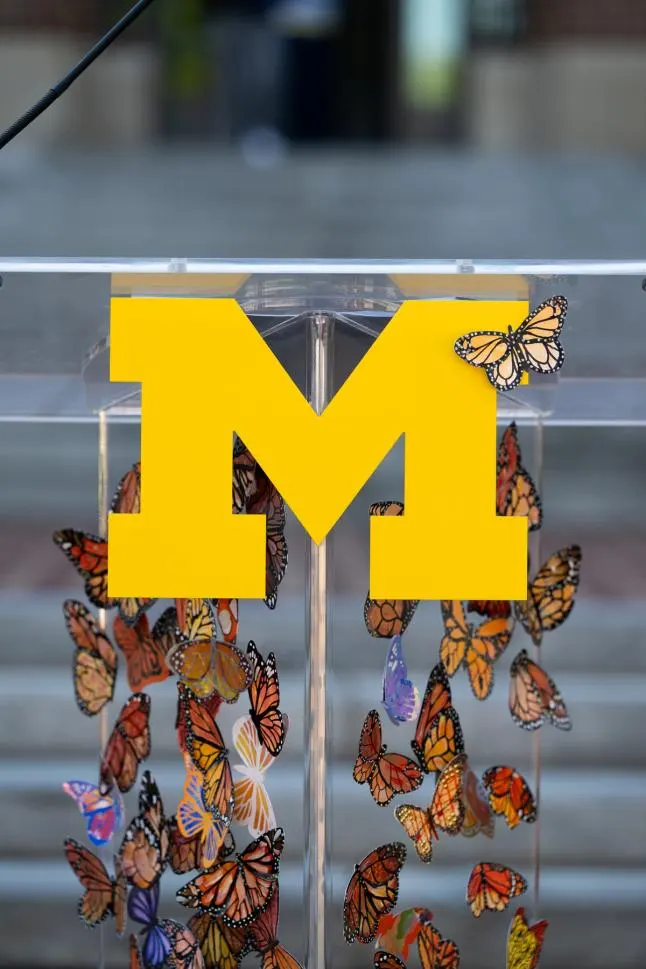
Climate Week signature
menu close
Climate week 2026

About

At the intersection of urgent global challenges and transformative potential, the University of Michigan's Climate Week 2026 represents our collective commitment to addressing climate change through innovative, collaborative action.

Read the recap of U-M's Climate Week in 2026. >>

Climate Week in 2025. >>

Key Objectives

Our objectives are designed to transform ambitious climate goals into tangible, impactful actions that address the complex environmental challenges of our time through the following principles:

  • Grounding
    • Articulate U-M’s broader framework for advancing climate, sustainability, and environmental justice impact
    • Affirm U-M's commitment to carbon neutrality, and raise awareness about ongoing decarbonization efforts
    • Expand the arc of activity at U-M, connecting past work with future efforts, including Vision 2034 and Campus Plan 2050
    • Build critical research and community connections
  • Interdisciplinary Work
    • Build bridges from the U-M enterprise to community-based organizations
    • Highlight the interdisciplinary nature of both the challenge and solutions
    • Roll out key, interdisciplinary initiatives
  • Sustained Momentum
    • Build momentum and connections around climate research on campus and beyond, including the business, policymaking, and philanthropic community
    • Articulate research and technology solutions to the climate crisis

Encourage a vision of climate action that centers celebration, art, joy, and creativity through highly visible student engagement.

A woman with long dark hair and glasses smiles while speaking into a handheld microphone. She wears a light-colored blazer or cardigan and appears to be presenting or speaking at an event. The image features an artistic collage design with blue circular bubble patterns, geometric shapes, and what appears to be ocean waves or water imagery in blue tones at the bottom, creating a cohesive visual theme around water or marine topics

Our Approach

U-M's Climate Week brings together students, faculty, staff, alumni, and community members to:

  • Discuss solutions to halt climate change
  • Accelerate climate resilience
  • Create pathways to a sustainable future
Three people collaborate around a large technical drawing or blueprint spread on a table. A woman with long dark hair sits on the left, while two men lean in from the center and right to examine the detailed plans together. The scene appears to be at a construction or project site, with natural materials like wood and rope visible in the foreground. The image has a stylized design treatment with geometric orange and cream colored shapes overlaying the black-and-white photograph.

Climate Week 2026 Recap

The University of Michigan's Climate Week 2026 marked the University of Michigan’s second tri-campus celebration of climate action, sustainability, and environmental justice. Here are some key outcomes:

  • Nearly 100 events across all three U-M campuses and beyond.
  • Thirteen schools and colleges, 10 research institutes, and 14 administrative offices contributed programming
  • 200+ volunteers and thousands of participants

Students remained at the center of Climate Week, shaping programming, exploring climate connections in their fields, and carrying ideas forward. A student engagement board, comprising of students from Ann Arbor, Flint and Dearborn. To sustain that engagement beyond the week itself, the student mini-grant program, launched in 2025, continued with expanded funding for events during and after Climate Week. Climate Week 2026 brought 200 high school students to U-M, up from 150 last year, through a continued partnership with the Center for Educational Outreach. Positioning Climate Week as both an educational opportunity and a pathway to future engagement at U-M.

Climate Week 2026 Report cover